
Berlin Wiki: Your Guide to the 2026 Berlin Election

WahlheYmatPost,

Berlin Wiki
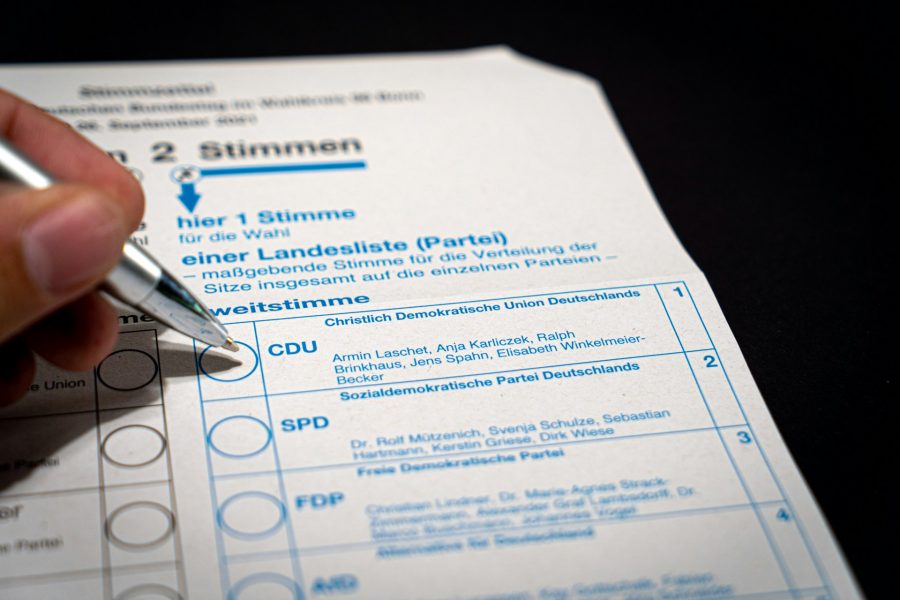
On September 20, 2026, Berlin will elect a new House of Representatives and its district assemblies—but what does that actually mean, who gets to vote, and how do these decisions shape the city? Together with Berliner Morgenpost, we are launching “Berlin Wiki,” a series that breaks down the basics of Berlin’s electoral system in a clear and accessible way.

What will be elected in Berlin in 2026?

On September 20, 2026, a new House of Representatives will be elected in Berlin. At the same time, the district assemblies of Berlin’s twelve districts will also be elected. The electoral term is always five years. Voters therefore decide which parties and politicians will serve in these bodies over the next five years. These elections determine who makes political decisions in Berlin—both for the entire city and for the individual districts.

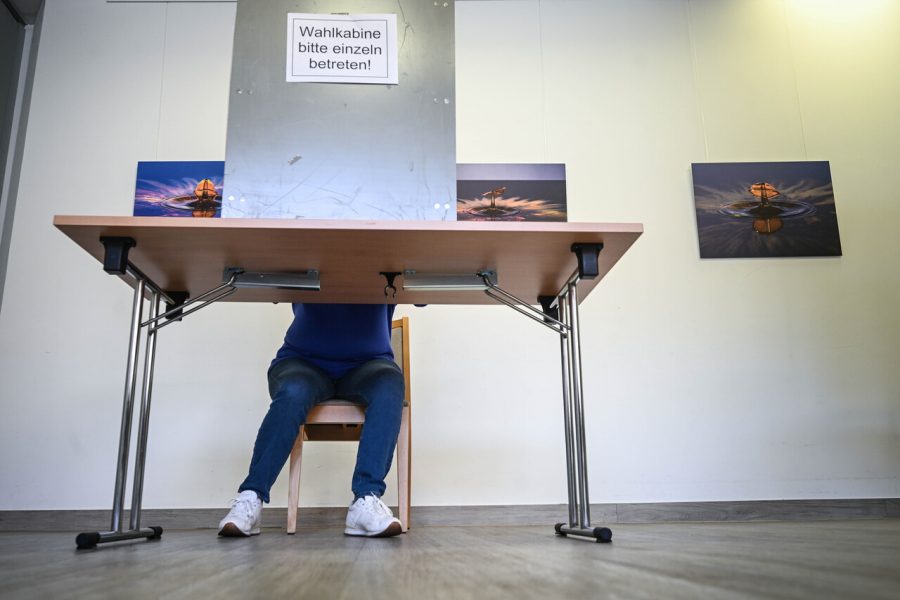
All German citizens with permanent residence in Berlin are eligible to vote. For the district assemblies, people with EU citizenship are also allowed to vote. For the first time, 16- and 17-year-olds are also eligible to vote.

What is the House of Representatives (Abgeordnetenhaus) in Berlin?

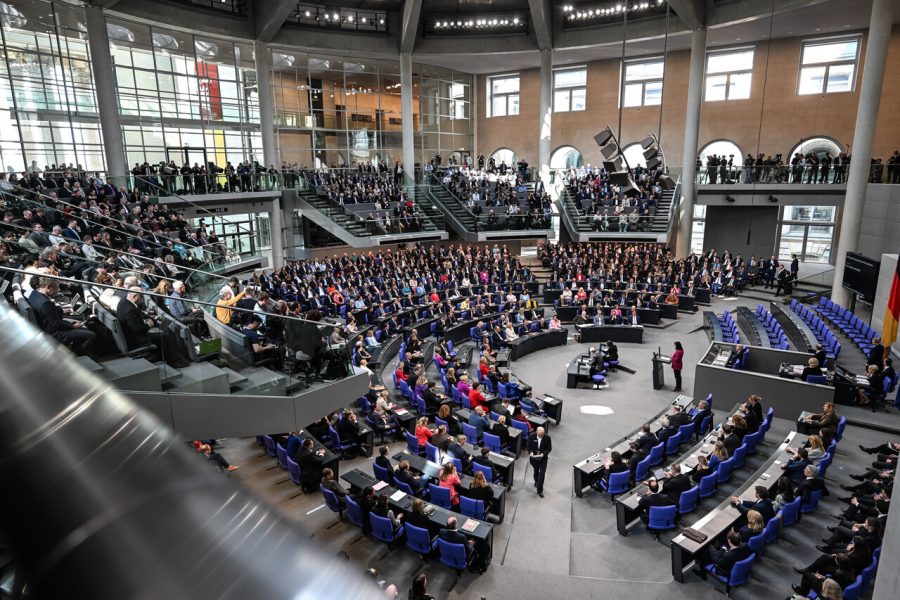
Berlin is not only a city but also a federal state of Germany and therefore has its own parliament. In Berlin, it is called the House of Representatives (Abgeordnetenhaus). It is located in the former Prussian State Parliament building in Berlin-Mitte.

It has at least 130 seats, which are filled by elected members. These belong to different parties and form parliamentary groups. Together, they decide on laws and important political issues for Berlin. The composition of the parliament depends on the election results.

The House of Representatives primarily deals with issues that directly affect Berlin, such as schools, public transport, or housing.

What is the Senate in Berlin?

The Senate is the government of the federal state of Berlin. It implements political decisions and manages the city’s administration.

The Senate consists of the Governing Mayor of Berlin and several senators. Each senator is responsible for a specific area, such as education, transport, or internal affairs.

The House of Representatives elects the Governing Mayor. After being elected, the mayor appoints the senators and forms the new Senate. While the House of Representatives passes laws and makes political decisions, the Senate implements these decisions in practice. The result of the 2026 election will therefore also determine how Berlin’s future Senate is composed.

What is a district (Bezirk)?

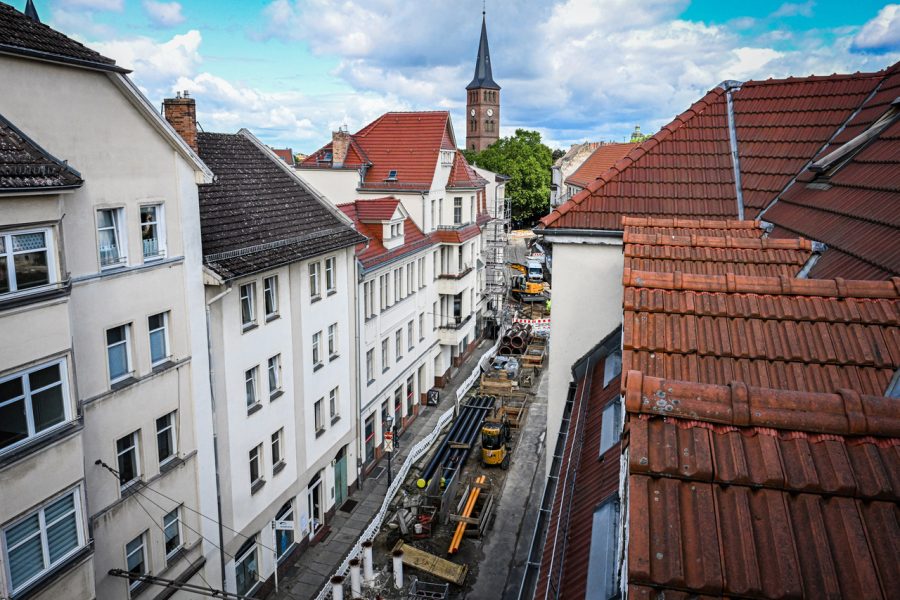
Berlin is divided into twelve districts (Bezirke), with an average population of 300,000 per district..

After German reunification in 1990, Berlin initially consisted of 23 districts. In 2001, they were reduced and merged into twelve. This is why many districts have double names, such as Tempelhof-Schöneberg.

District administrations are responsible for local matters that do not concern the entire city. For example, they manage local parks and schools. They are also responsible for citizens’ offices, where residents often need to go to submit applications.

Each district has a district mayor, who is elected by the district assembly.

What is a District Assembly (Bezirksverordnetenversammlung, BVV)?

A District Assembly (Bezirksverordnetenversammlung, BVV) is the political representation of residents in Berlin’s districts. It decides on important local issues such as schools or infrastructure. It also elects the district mayor.

However, it cannot pass its own laws.

The BVV consists of at least 55 members. They are elected by district residents every five years, at the same time as the House of Representatives election.

All EU citizens with residence in the district who are at least 16 years old are allowed to vote in BVV elections or run as candidates themselves.

The factions in the BVV usually consist of the major German parties such as CDU, SPD, the Greens, the Left Party, and AfD.

Here you can find the Berlin Wiki page of Berliner Morgenpost.
Author:

More From WahlheYmatPost

  • Home Is Not a Place: A Berlin Exhibition Rethinks Migration

    Home Is Not a Place: A Berlin Exhibition Rethinks Migration

    How do people change after moving from one place to another? What do they leave behind and what do they carry with them? Is it possible to feel at home in a space that is vastly different from the one we left? In her latest installation “Remembering Space (how much past can the present hold)”,…

  • Berlin Wiki: Your Guide to the 2026 Berlin Election

    Berlin Wiki: Your Guide to the 2026 Berlin Election

    What will be elected in Berlin in 2026? On September 20, 2026, a new House of Representatives will be elected in Berlin. At the same time, the district assemblies of Berlin’s twelve districts will also be elected. The electoral term is always five years. Voters therefore decide which parties and politicians will serve in these…

  • “Das Volk” in 2026: Time to Redefine the People

    “Das Volk” in 2026: Time to Redefine the People

    “Do you behave as the person you truly want to be?” I ask myself this question in moments when I clearly fall short. Yes, it is hard to live up to one’s ideal self—I’m probably not the only one who feels this way. The same applies for societies. Over the past ten years, I have…

  • Germany Has an Energy Crisis — Just Not the One You Think

    Germany Has an Energy Crisis — Just Not the One You Think

    Energy – scarcity.We talk about energy all the time—but only in physical terms.I find myself thinking more and more about our social energy, which may matter even more. Because a society also needs energy. This energy, I would call social energy—a concept that appears in the social sciences under terms like collective intelligence or social…

  • Multilingualism, Participation, and Power: A Berlin Case Study

    Multilingualism, Participation, and Power: A Berlin Case Study

    Local migrant organizations often play a crucial yet underrecognized role in shaping participation, representation, and social cohesion within urban districts. Based on my experience directing the migraUp! Pankow project in Berlin between 2015 and 2025, this reflection highlights how community-based initiatives can strengthen migrant organizations while simultaneously contributing to local governance and democratic participation. migraUp!…

  • “Democracy Is More Than Voting”: Sami Atris on Organising Communities in Berlin

    “Democracy Is More Than Voting”: Sami Atris on Organising Communities in Berlin

    WHP: Can you briefly introduce the Berliner Bürgerplattformen? What is its main purpose in Berlin? Sami Atris: Who actually decides what happens in our lives? How much influence do we have over how high our rent is — or whether we can even afford to stay in our neighbourhood? Who decides whether our children go…

  • “Treat Every Case as Your Own”: How Zaki e.V. Supports Berlin’s Overlooked Migrants

    “Treat Every Case as Your Own”: How Zaki e.V. Supports Berlin’s Overlooked Migrants

    WHP: Can you briefly introduce Zaki e.V.? What is your main mission in Berlin? Pia Bergmann: Zaki – Bildung und Kultur e.V. is a migrant-led organization, with its main office located at the Berlin Global Village in Neukölln and another office in Pankow. The organization’s focus can be summed up in one sentence: arrival and…

  • One In Four Berliners Cannot Vote: Europe Still Struggles With Migrant Political Participation

    One In Four Berliners Cannot Vote: Europe Still Struggles With Migrant Political Participation

    A recent report by the Migration Policy Group, a think tank based in Brussels, shows that Germany is among the best of the worst when it comes to enabling and encouraging the political participation of immigrants. Germany’s score in this is only a small part of the bleak findings from the report’s Political Participation Index,…

  • ‘Migrants’ Are The Greatest Opportunity For Germany

    ‘Migrants’ Are The Greatest Opportunity For Germany

    “Change begins with a conversation.” That’s why I was glad to be invited to the SharedTableDinner by the Oneliness Project. How do we find a sense of home in each other? How are loneliness and democracy connected? These were the questions that shaped the evening. Amazing people shared deeply personal thoughts about how they connect…

  • Ukrainian Voices in Berlin: “People Are Not Objects for Integration Debates”

    Ukrainian Voices in Berlin: “People Are Not Objects for Integration Debates”

    WHP: Can you briefly introduce the Allianz Ukrainischer Organisationen e.V (Alliance of Ukrainian Organizations)? What is its main task in Berlin? Oleksandra Bienert: The Allianz Ukrainischer Organisationen e.V. is a nationwide association currently bringing together 23 civil society organizations in eight federal states. These organizations were founded by people with a Ukrainian migration background and…

  • WahlheYmat Turns Two — And Invites You In

    WahlheYmat Turns Two — And Invites You In

    WahlheYmat is looking for new members.That is the message I would like to write about today. Before my life in Berlin, I was never this direct. I am learning a lot here. And I don’t just mean the famous Berliner Schnauze — like going into a bakery and saying: “Good morning, so sorry for disturbing…

  • The Berlin Blueprint: Participation as the Ultimate Act of Self-Determination

    The Berlin Blueprint: Participation as the Ultimate Act of Self-Determination

    In the glossy catalogs of modern wellness, “self-help” is often sold as a retreat from the world: a private journey of healing through products and quiet contemplation. Berlin’s history, however, offers a more rugged, democratic alternative. In this city, wellbeing has never been found in isolation. It has been forged through participation. To be a…

  • No Permission, More Love: Building Your Vision in Berlin Like Nalan Sipar

    No Permission, More Love: Building Your Vision in Berlin Like Nalan Sipar

    When Nalan Sipar asked her boss at Deutsche Welle if she could create content in Turkish to help inform the German-Turkish community during the early days of the 2020 global pandemic in Berlin, the answer was no.  Her boss at the time told her that a state contract prevented the government-funded broadcaster from covering information…

  • “Discrimination is not an individual problem, but a structural one”

    “Discrimination is not an individual problem, but a structural one”

    WHP: Can you briefly introduce Yekmal? What is your main task in Berlin? Remziye Uykun: Yekmal e.V. is a migrant education, parent and community organisation based in Berlin that now operates nationwide, with locations in several federal states. Our main task is to strengthen multilingualism as a democratic resource, enable equal participation and structurally anchor…

  • Berlin’s Silent 25 Percent

    Berlin’s Silent 25 Percent

    “We are in a very tense situation with a record number of non-voters and a great distrust in society towards institutions, so it was the right time to convene this citizens’ assembly.” This quote does not come from Berlin — although the record number of non-voters is also the case here. It was said by…

Address

Am Hamburger Bahnhof 3
10557 Berlin
Germany

hey@wahlheymat.de

Social Networks